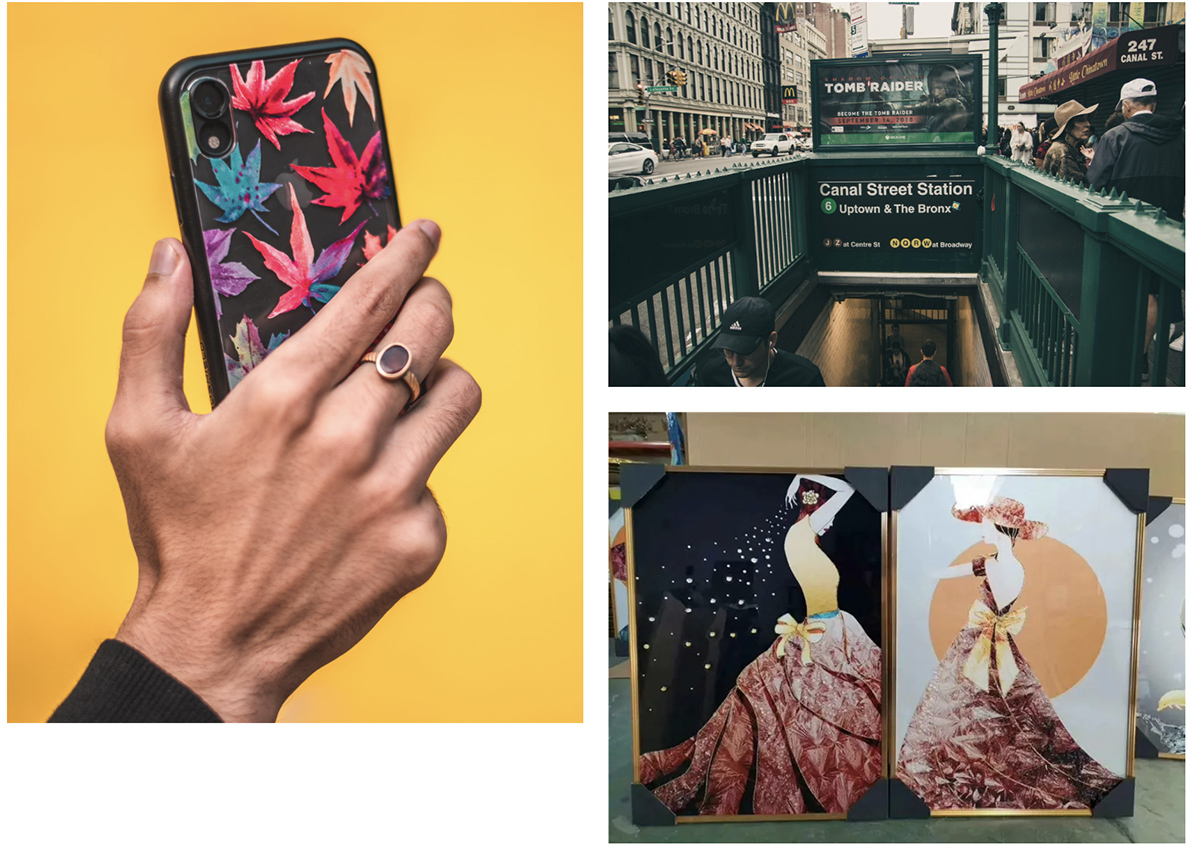
What Is UV Printing and How Does It Work? A Beginner's Guide (Updated 2025)

By Jingtong Industry September 7th, 2025

UV printing (short for Ultraviolet Printing) is a digital printing technology that uses ultraviolet light to cure or dry ink instantly as it’s printed onto a surface. Instead of absorbing into the material like traditional inks, UV inks stay on top and harden immediately when exposed to UV light. It can work to 3D printing at different shapes.


Compared to traditional printing, One of the most prominent advantages of UV printing is its faster printing speed and higher printing efficiency, in addition to this, UV printing also features high accuracy, high definition and long lasting time. UV printing can directly print on a wide range of products, including wood, acrylic, glass, crystal and more.  Moreover, UV ink is eco-friendly, which does not contain harmful substances and will not pollute the environment.

What are the Advantages and Disadvantages of UV Printing?
As the saying goes, every coin has two sides. UV printing is of no exception, featuring distincitve advantages and some disadvantages.

Advantages of UV Printing
UV printing is fast, flexible, eco-friendly, and produces vibrant, durable prints on almost any surface, making it popular for signage, packaging, promotional items, and personalized products.

 1. Versatility in Materials
  • Can print on almost any surface: paper, plastic, metal, glass, wood, ceramic, acrylic, leather, and more.
  • Works on both flat and uneven surfaces (using flatbed or rotary attachments).

2. Instant Drying & Faster Production
  • Inks cure instantly under UV light → no waiting time.
  • Ideal for on-demand printing and short runs.

3. High-Quality & Vivid Prints
  • Produces sharp details and vibrant colors.
  • Can print textured effects, gloss, matte finishes, or 3D raised printing.

4. Durable & Long-Lasting
  • UV ink is scratch-resistant, water-resistant, and fade-resistant.
  • Suitable for both indoor and outdoor use.

5. Eco-Friendly Printing
  • Uses low-VOC inks, which release fewer harmful chemicals.
  • Minimal waste compared to traditional printing methods.

6. Cost-Effective for Customization
  • No printing plates or screens needed → saves setup costs.
  • Efficient for short-run and customized printing.

7. Supports Special Effects
  • Can achieve white ink printing (on dark or transparent materials).
  • Allows layered printing for embossed or tactile effects.

While UV printing has many advantages, it also comes with some disadvantages that are important to consider:

1. Higher Equipment Cost
  • UV printers are more expensive than traditional inkjet or screen printers.
  • Initial investment can be high for small businesses.

2. Limited Flexibility on Soft Materials
  • Works best on rigid or coated materials.
  • On very soft or stretchy surfaces (like certain fabrics), UV ink may crack or peel because it sits on top rather than absorbing.

3. Maintenance Requirements
  • UV printers need regular cleaning and calibration to prevent ink clogging.
  • UV inks can cure prematurely if exposed to light during handling.

4. Ink Cost
  • UV inks are generally more expensive than standard solvent or water-based inks.
  • White ink, often used for printing on dark/transparent materials, consumes more and adds to costs.

5. Size Limitations
  • Flatbed UV printers are limited by their bed size, so printing very large items may require special equipment.

6. Surface Adhesion Issues
  • On some smooth or untreated surfaces (like glass or metal), the ink may need a primer or coating to ensure proper adhesion.

7. Health & Safety Concerns
  • Although safer than solvent inks, UV light exposure can be harmful if proper shielding and safety protocols aren’t followed.
  • Some UV inks may cause skin irritation without protective handling.

Summary:
UV printing is powerful and versatile, but it comes with higher costs, more maintenance, and some material limitations. It’s best suited for businesses needing high-quality, durable, and customized printing across various surfaces.

How Does UV Printing Work?
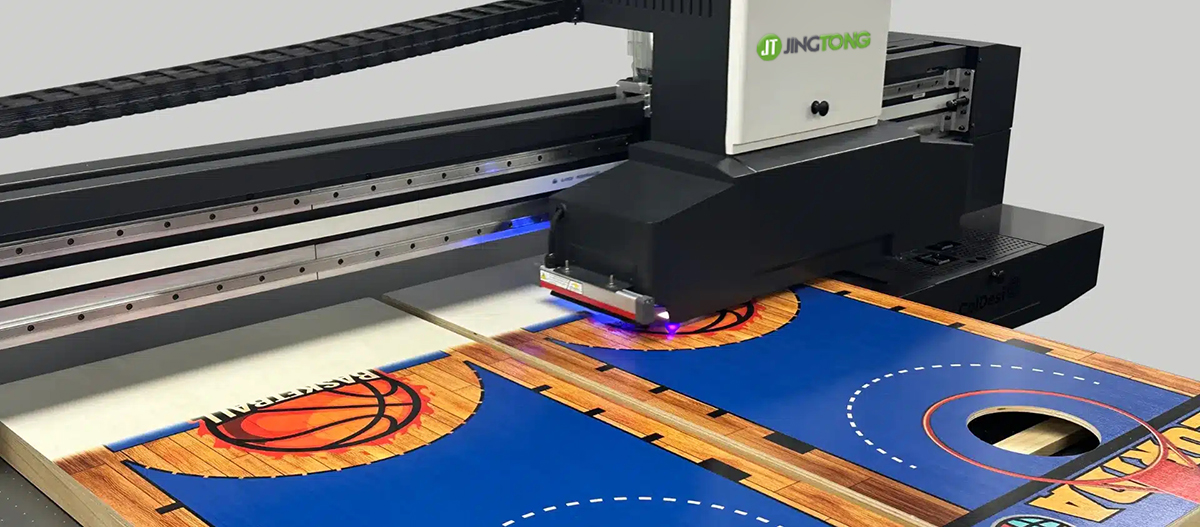
During UV printing process, UV printer distributes the UV ink to the surface through the voltage inside the nozzle, as soon as the ink reaches the surface, the UV LED lamp cures the ink to form patterns. As UV printing work process explains in above video, the UV printing is contactless to the printing surface.

From this point of view, the printing principle of UV printing is obviously different from conventional printing. The 5 steps of UV printing include:

Step 1: Digital File Preparation
  • The design is prepared on a computer and sent to the UV printer, just like with a normal inkjet printer.
  • The printer knows where to place each droplet of ink.

Step 2: Ink Application
  • The UV printer sprays liquid UV ink directly onto the surface (substrate).
  • Unlike traditional inks, UV ink doesn’t need absorption—it stays on top.

Step 3: UV Light Curing
  • Special UV LED lamps follow the print head.
  • As the ink lands on the material, the UV light instantly cures (hardens) it through a chemical reaction called photopolymerization.

Step 4: Layering & Special Effects
Because curing is instant, the printer can build multiple layers of ink.
This allows effects like:
  • Raised 3D textures
  • Glossy or matte finishes
  • White ink underlays (for printing on dark or transparent surfaces).

Step 5: Finished Print
  • The result is a vibrant, durable, and ready-to-use print with no drying time needed.

What Can You Make with UV Printing?

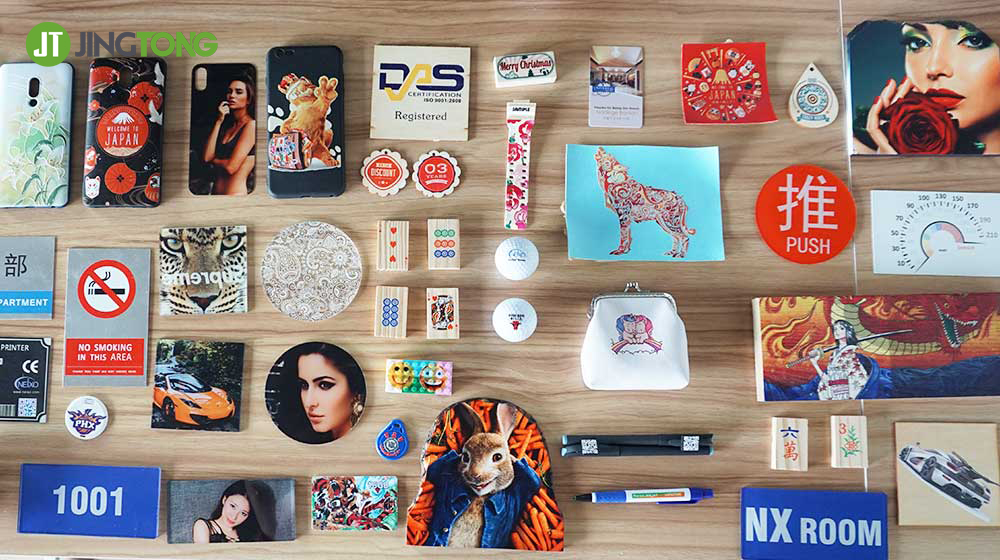
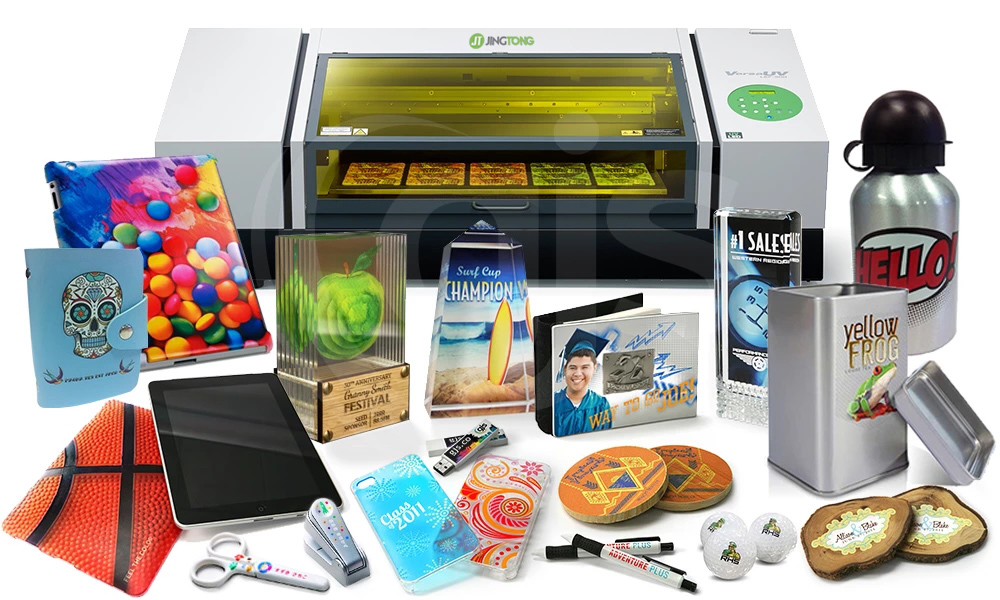
UV printing has already been applied in all walks of life, the UV printing applications including industrial manufacturing, home decor, advertisement industry and medical industry.

Its strength lies in customization, short-run production, and printing on unusual materials that traditional printers can’t handle. Here’s a breakdown of what you can make with UV printing and its main applications:

1. Promotional & Personalized Products
  • Phone cases, power banks, USB drives, pens, mugs, and keychains.
  • Custom gifts with names, logos, or photos.

2. Signage & Displays
  • Indoor and outdoor signage.
  • Exhibition boards, retail POP displays, directional signs.
  • Backlit acrylic signs.

3. Packaging & Labels
  • Short-run packaging prototypes.
  • Custom boxes with logos.
  • Bottle labels, cosmetic packaging, luxury branding.

4. Interior Decoration
  • Printing on tiles, glass panels, wood boards, acrylic sheets.
  • Customized furniture panels or wall art.

5. Industrial & Commercial Uses
  • Printing on control panels, machine parts, and electronic housings.
  • Branding for tools or equipment.

6. Textiles & Leather Goods
  • Printing on leather bags, wallets, shoes.
  • Custom designs on fabrics for accessories (though not ideal for stretchable clothing).

7. Art & Creative Projects
  • Canvas art reproductions.
  • Fine art prints with texture effects.
  • Custom decorative items.

What are the Materials UV Printing can Work on?

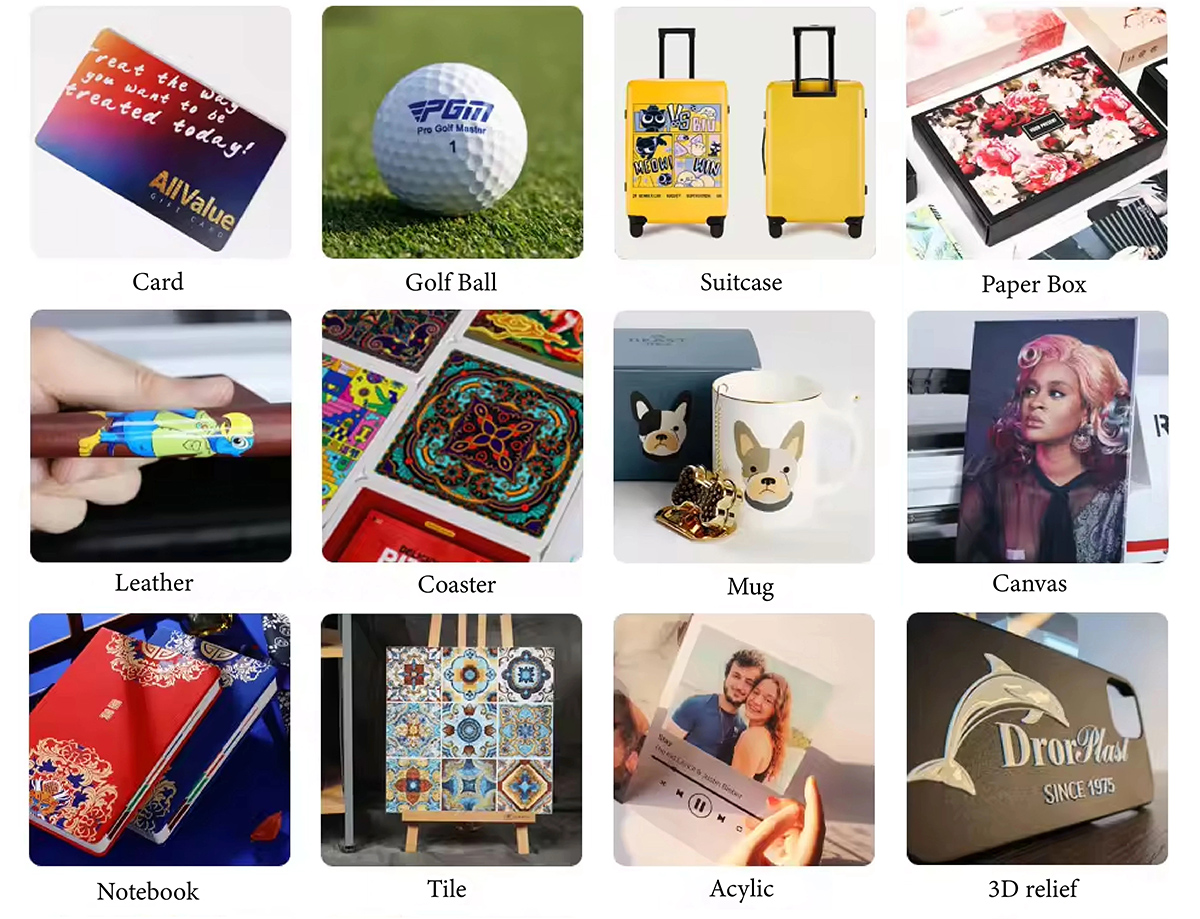
One of the most advantage of UV printing is it works on almost all kinds of materials and substrates.

UV printing can work on materials as lists: 
  • Wood, leather;
  • PVC, PC, PET, PE, ABS tablets;
  • Corrugated cardboard, hollow plate, KT board, chever board;
  • Glass, tiles, marble;
  • Acrylic boards;
  • Aluminum plastic boards, polyurethane boards;
  • Other hard surface substrates.

How Do I Make Money from UV Printing?
To make money from UV printing, more business owners consider: Personalized customized products, advertising printing and processing, and home decor as the basic entrepreneurial directions to start.


Personalized customized products
Nowadays, many young people pursue uniqueness to show they are different, as a result, many business men choose personalized customized products as a start-up direction, the UV printing perfectly meet this need. Business owner just need to design the images according to customers’ needs. Among the products, personalized phone cases, leather bags and other leather items are most fond of.

Advertising printing and processing
Large UV printers, equipped with many printheads, are able to print on large area at a very high speed. For this reason, those who want to enter advertising printing industry tend to choose UV printers of large sizes to start advertising inkjet business.

Home decor
UV printer can not only print on the glass or ceramic tile directly but also print customized patterns according to customers’ specific needs, making it very suitable for home decor industry development.

UV Printing Applications:

As UV printing can make almost limitless products, as long as idea come up in your mind, personalized gifts, branded items or for event or holidays, once choose UV printing, you can make money from almost everywhere.

The UV printing applications include:
  • Posters
  • Banners
  • Outdoor flags
  • Key chains
  • Bus shelters
  • Personalized products
  • Wine bottles
  • Cups, Mugs
  • Cosmetic packaging
  • Phone case, Tablet case
  • Sports flying tray
  • Bar code
  • And more

What is the ROI (Return On Investment) with UV Printer or UV Printing Solution?
UV printing is definitely profitable, even small orders bring great profit, margin. For instance, printing phone cases with the help of UV printer. Several phone cases can profit, hence, investing in UV printing is a good choice.

However, it is complicated to calculate ROI of UV printing accurately because the costs differs depending on the sizes of UV printers, machine maintenance costs, printheads, consumables and other factors.

You may find a UV printing ROI calculator on related website, but the fields needed will prevent you from continuing to calculate. If you really want to know about ROI of UV printing, talking to a field expert will be a better choice. From this aspect, we suggest that you talk with familiar business owner or talk your needs and expectations directly to the UV printing industry professionals. Also can contact JINGTONG INDUSTRY expert know more.

How to Choose Best UV Printer for UV Printing?
In fact UV printer is just a category of printer includes different types such as UV flatbed printer, UV roll-to-roll printer, UV hybrid printer, UV DTF printer and etc. (So if you see somewhere is selling, displaying just “UV Printer” but not specify the type, do ask the question: what type of UV printer it is?) Different types of printers can adapt to various business and application scenarios. Therefore, if you are seeking more information about UV printers, the quickest way would be to consult professionals in the industry.

According to the industry experts advices, to choose the best UV printer, consider 4 most important factors: UV printer performance, stability, price, training and service support.
  1. Know the print performance of UV printer: UV printers coming from different factories may show different print performance. So it is necessary to know about the print quality and color restoration ability of machine. The best solution is that you can ask for some print samples to see the performance.
  2. Consider the machine stability: The stability of UV printer plays a crucial role in guarantee the production efficiency. If a UV printer is not stable and breaks easily, it will cause you to fail to finish the orders within the agreed time, leaving bad impression on your customers. By choosing a brand with a good reputation for product quality and after-sales service, you can have confidence in your purchase. You can rest assured knowing that if any problems occur or if you need assistance, there will be a dedicated team ready to help resolve any issues promptly and efficiently.
  3. Consider the price of UV printer: UV printers of different sizes and equipment have different prices. You need to decide according to your own budget.
  4. Training, technical support and service: At some points, your UV printer will require maintenance and servicing. When you invest in a UV printer, it’s crucial to consider the benefits of receiving comprehensive engineering support and a service package. By doing so, you can ensure that your printer remains operational for an extended period, allowing you to stay ahead in the game.

In addition to the factors mentioned above, knowing the seven core components of UV printer will also help you make an informed decision.


Conventional Printing vs. UV Printing, What are the Differences?
The following table is a great resource to learn detail comparison between conventional printing and UV printing from perspective of craftsmanship, applied substrates, printing performance, environmental performance, printing speed and cost.
 

Craftsmanship

Applied Substrates

Printing Performance

Environmental performance

Printing Speed

Cost

Conventional printing

uses ink or water -based ink and requires multiple printing and drying

Mainly applied to paper and cardboard

Rich color performance but worse performance in the transparent material

Conventional ink may contain volatile organic matter, which causes a certain pressure on the environment

Slower, about a dozen square meters per hour

The printing machine and ink is relatively cheaper

UV printing

Uses UV solidification ink and completes printing through disposable solidification

Metal, plastic, ceramics, glass, wood and other substrates.

High resolution and high definition

Print clear and realistic patterns in the transparent PET material

UV ink does not contain harmful volatile organic compounds (VOCs), which is green and pollution-free

Faster, about dozens of square meters per hour

The printer and UV ink is more expensive


As it can be seen, whether UV printing or conventional printing, it has own advantages and limitations. Choosing right printing technology needs to depends on the specific needs. However, in the future, with the development of technology, UV printing technology will show its stronger potential in more and more fields, becoming a highlight of the printing industry.

Summary
This passage has given a comprehensive introduction to the UV printing and listed the key factors of choosing correct UV printer. When it comes to making a decision, you need to think about all the tips. Choosing the right UV printer can have a profound impact on the quality of your prints, the productivity of your work, and ultimately, your return on investment.

IF you have no idea which model of UV printer would be the best fit for your business, please consider consulting the experts of JINGTONG INDUSTRY, who will help you make a right decision about which model of UV printer best suits your business.
What is DTF Printing and How Does it Work? (2025 Updated)
Previous
What is DTF Printing and How Does it Work? (2025 Updated)
Read More
What is Direct To Garment (DTG) Printing?
Next
What is Direct To Garment (DTG) Printing?
Read More
Leave a message
Name*
Email*
Phone Number
Country
Company
Website
Message*