What is Direct To Garment (DTG) Printing?
By Jingtong Intelligent Technology
September 11th, 2025
Have you ever seen a stunning, full-color image printed directly onto a t-shirt and wondered how it was done? That's the magic of DTG printing! The global direct-to-garment printing market was estimated at $1.75 billion in 2023 and is expected to grow at a CAGR of 12.5% from 2024 to 2030. Clearly, DTG has emerged as a transformative technology in the apparel industry. But how do you get started with DTG?In this article, we explain how DTG printing works, its pros and cons, and is DTG right your printing business? We also offer actionable insights on creating your own best selling custom clothing line.What is DTG Printing?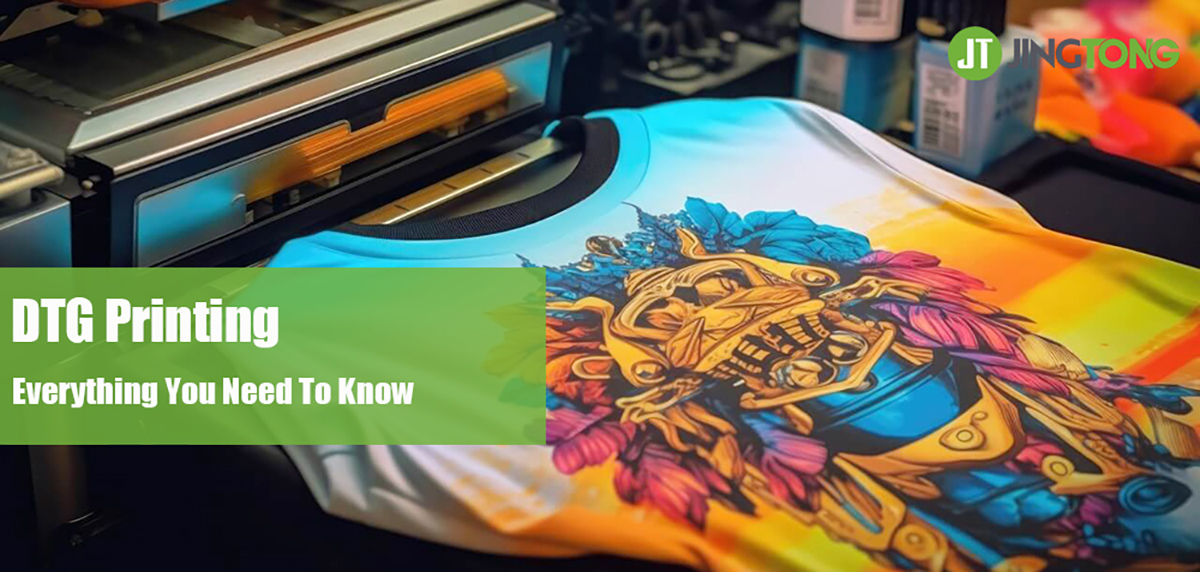 Direct-to-Garment (DTG) printing is a modern textile printing method where specialized inkjet technology prints designs directly onto fabric—most commonly cotton t-shirts and apparel. Unlike traditional printing techniques that rely on heat transfers or screen stencils, DTG works more like a paper printer: it sprays water-based inks straight onto the garment fibers.Many DTG printers are used in screen-printing companies that decorate higher volumes of garments for brands, sports teams, and retailers. DTG printing enables screen printing companies to accept smaller-run, fast-turnaround jobs or decorate shirts with variable data or full-color photographic designs. DTG printers are also used in home-based businesses, gift shops, and promotional products companies. Amazon and Fanatics use fleets of DTG printers to fulfill online orders from customers throughout the U.S.DTG printing requires less floor space than screen printing and doesn’t require making, cleaning, and storing multiple screens. Plus, the learning curve for DTG printing is less steep than screen printing, especially for young creative professionals who have grown up using digital cameras and graphics programs.
How DTG Printing Works
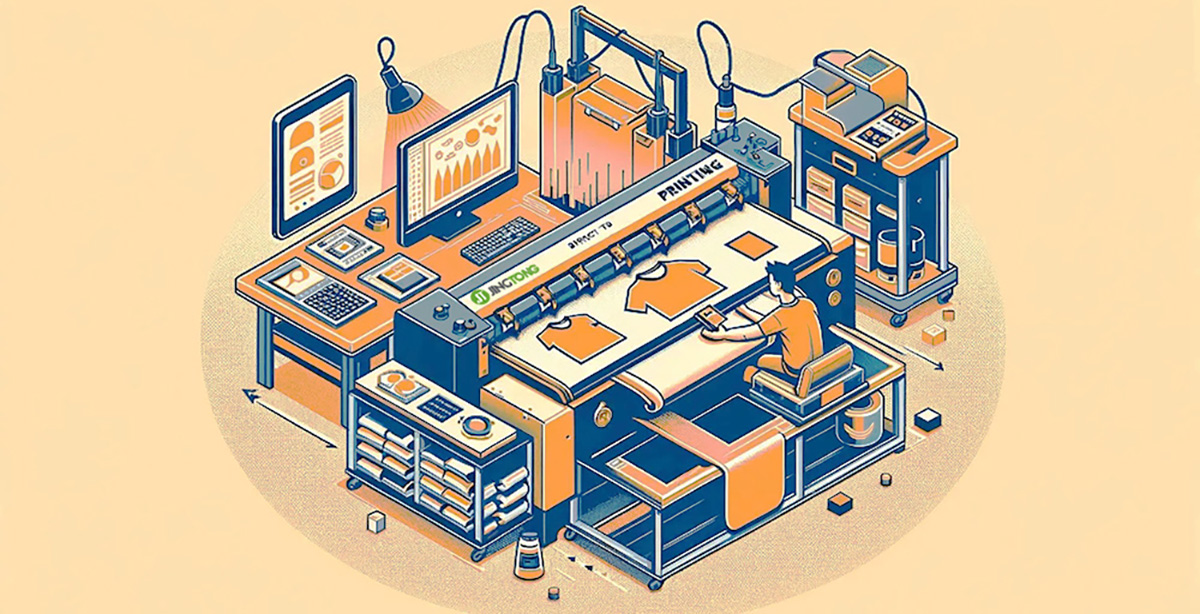
- Pre-treatment – Dark garments are usually pre-treated with a special solution so the white ink adheres properly.
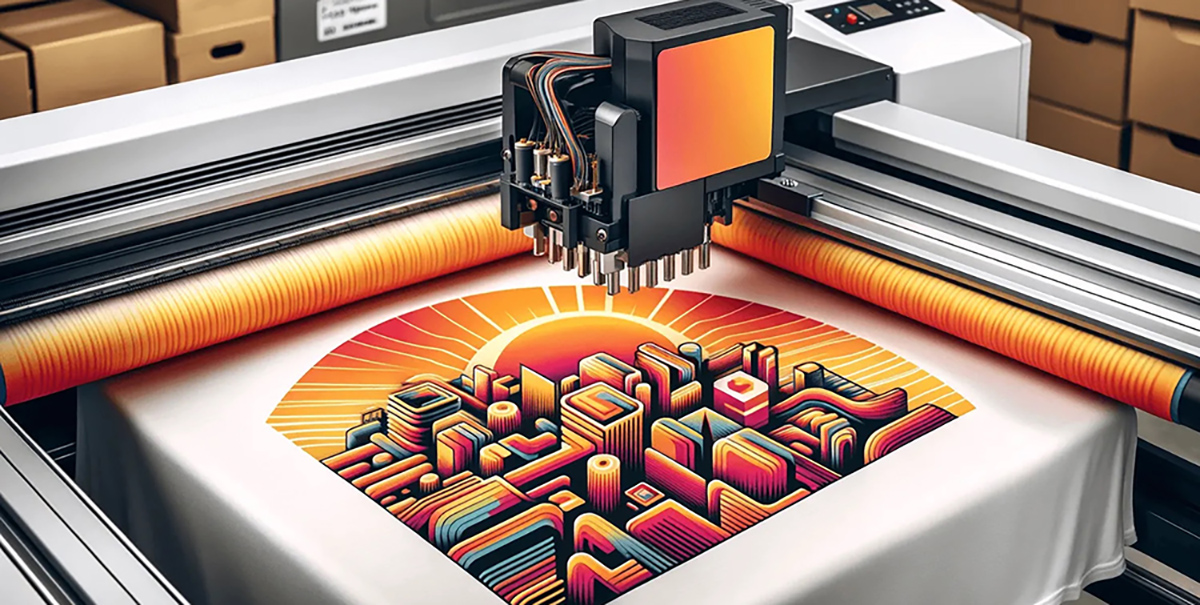
- Printing – The garment is placed on a flatbed DTG printer. The machine prints the design directly onto the fabric, layer by layer.
- Curing – Heat pressing or conveyor dryers are used to cure (set) the ink, ensuring durability and wash resistance.
Advantages of DTG Printing
- High Detail & Full Color – Can produce complex, photo-quality designs with gradients and fine lines.
- No Minimum Order – Perfect for one-offs or small runs (no need for screens or setup).
- Soft Feel – Inks soak into the fabric, leaving a smooth finish.
- Eco-Friendly – Uses water-based inks that are less harmful than plastisol inks.
Limitations of DTG Printing
- Best for Cotton – Works best on 100% cotton or cotton-rich fabrics.
- Slower for Large Orders – Not as cost-effective as screen printing for bulk production.
- Color Limitations – White ink on dark fabrics requires pre-treatment, which can add extra cost.
 ApplicationsCustom t-shirts, hoodies, tote bags, baby clothes, and other cotton-based items.Popular with print-on-demand businesses, small clothing brands, and online custom apparel shops.Is DTG right for your printing business?DTG printing is an excellent choice for businesses looking to expand their offerings with customized products. But is it the right fit for your business?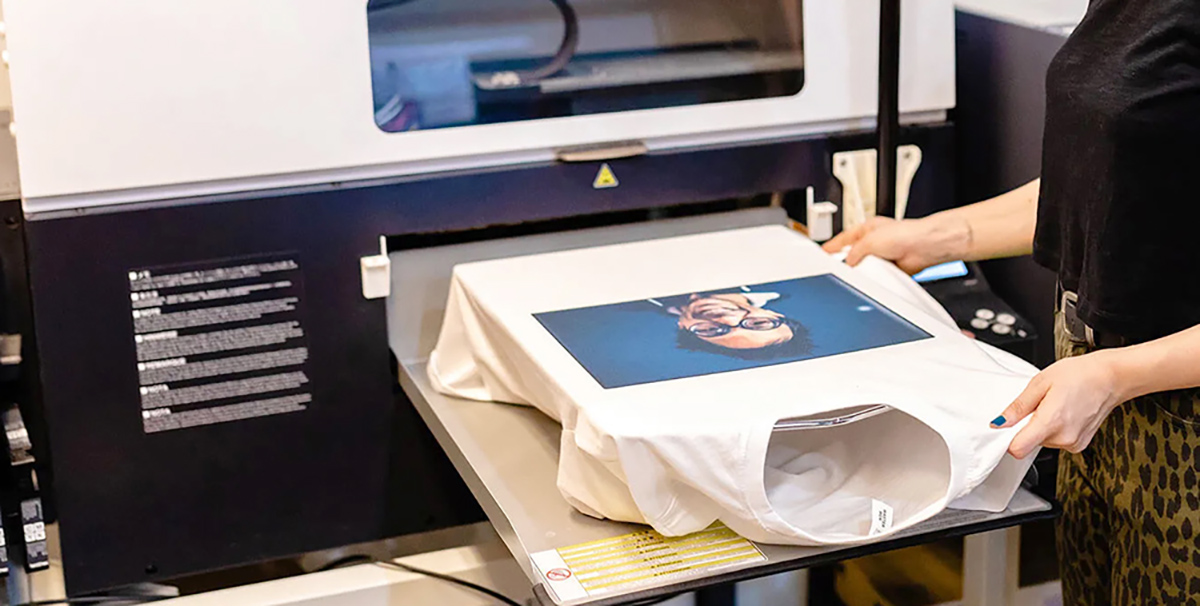
Here's a look at which businesses benefit most from DTG:
- Small ecommerce stores: DTG’s flexibility and low setup costs make it ideal for small online retailers that want to offer custom clothing with minimal upfront investment.
- Custom apparel brands: Those offering unique designs without large inventory commitments will find DTG beneficial, as it allows for print on demand capabilities.
- Startups needing low-volume production: DTG is perfect for testing new product ideas and designs at low risk and without bulk orders.
- Artists and designers: Creatives looking to bring their artwork to life on apparel without the complexities of traditional printing methods will enjoy DTG’s ease of use and quality output.
Before adopting DTG printing for your business and to assess its alignment with your business goals, make sure to:
- Understand your production process. Know how often you must produce new designs and the required quantities. DTG is ideal for short runs and frequent design changes.
- Evaluate your financial resources. While owning a DTG printer can be expensive, partnering with a print on demand service can minimize costs. Consider your budget and desired investment level.
- Determine your design needs. If your business thrives on complex, colorful designs, DTG produces intricate imagery with impressive detail.
- Consider sustainability goals. If being eco-friendly is part of your brand ethos, DTG’s water-based inks and minimal waste approach can be advantageous.
 Start creating high-quality prints with DTG printingAs you get started with DTG printing, it's important to remember that it's all about merging creativity with technology. Unlike traditional methods, DTG thrives on simplicity and sustainability, as it offers vibrant, detailed designs without the constraints of minimum orders.While DTG does well on cotton blends, it's less than ideal for high-polyester materials or large-volume prints. However, if your focus is on custom designs with eco-friendly practices, DTG can be your go-to solution.In short: DTG printing is like having a digital printer for your clothes—fast, precise, and perfect for small batches or highly detailed designs.
Previous
What Is UV Printing and How Does It Work? A Beginner's Guide (Updated 2025)
Read More
Next
International CISMA 2025: Revolutionizing the Sewing and Textile Industry
Read More


